
기초연구를 공학과 산업으로 연결하는 역할
응용물리 (Applied Physics)
응용물리 (Applied Physics)
기간/장소 및 개최방식
- 일자 : 2027년 2월 16일(화) ~ 18일(목) 2박3일
- 개최장소 : 부산광역시 한화리조트 (해운대)
- 개최방식 : 하이브리드 강의 (현장 + 온라인)
목적 및 내용
- 대학원생 및 연구원들의 응용물리에 대한 관심 제고 및 저변 확대
- 이론적 기초에서 응용물리 분야 최신 연구 주제 및 동향 강연
- 시료 성장부터 소자 제작, 측정, 분석까지 유용한 연구방법론 및 비법 전수
등록인원 및 등록비용 [현장 강의, 온라인 강의]
| 대상 | 현장 강의 | 온라인 강의 | |
|---|---|---|---|
| 학생 (박사과정/석사과정/학부생) | 등록인원 | 200명 | 제한없음 |
| 등록비 | 35만원 | 15만원 | |
| 일반 (박사/ 교수급) | 등록인원 | 50명 | 제한없음 |
| 등록비 | 45만원 | 25만원 | |
※ 현장 강의 등록비에는 1회 석식(16일)과 2회 중식(17일, 18일) 제공이 포함 됩니다. (조식 및 숙박 미포함)
등록자 특전
- 참여수강자 전원에게 교육교재(강의 pdf 파일) 2주간 다운로드 및 강의영상 2주간 시청권 제공
- 성실수강자에게는 응용물리 아카데미 강의 수료증 및 부상 수여
- 우수수강자를 선별하여 상장 및 부상 수여
현장 강의 등록 및 수강신청
- 등록기간: 2026년 11월 13일(금) ~ 12월 2일(수) 24:00
- 등록가능명단 발표: 2026. 12. 7 (월)
- 등록방법: 한국물리학회 응용물리학분과 홈페이지(http://ap.kps.or.kr) 온라인 접수
- 수강료 납부 및 수강신청 기간: 2026년 12월 7일(월) ~ 12월 18일(금) 24시 (사무국에서 별도 연락드린 현장 참여 확정된 등록자)
- 수강신청 방법: 등록확인 페이지에서 수강신청 버튼 이용
- 문의: Appl.Phys.Academy2027@gmail.com
※ 현장 강의 신청자가 많을 경우 등록순서로 참여가 제한될 수 있으니 양해 바랍니다.
 http://ap.kps.or.kr/05web01.php
온라인 강의 등록
- 등록기간: 2026년 12월 19일(토) ~ 2027년 2월 16일 (화) 17:00
- 등록방법: 한국물리학회 응용물리학분과 홈페이지를 통한 등록
- 수강신청 방법: 등록확인 페이지에서 수강신청 버튼 이용
- 문의: Appl.Phys.Academy2027@gmail.com
주최
한국물리학회 응용물리학분과 / 중앙대학교 베리곡률 기반 신물성 연구센터 (BeCaP) / 포항공대 양자 각운동량 동역학 센터
강의 시간표
| 시간 | 2월 16일 (화) | 2월 17일 (수) | 2월 18일 (목) | |||
|---|---|---|---|---|---|---|
| 09:00 | 저차원 물리1 (09:00~11:00) 류혜진 | 박막성장1 (09:00~11:00) 이승훈 | 양자1 (09:00~11:00) 채은미 | 계산물리1 (09:00~11:00) 김정우 | ||
| 09:30 | ||||||
| 10:00 | ||||||
| 10:30 | ||||||
| 11:00 | 저차원 물리2 (11:00~13:00) 김지희 | 박막성장2 (11:00~13:00) 장소연 | 실험기법1 (11:00~13:00) 양상모 | 계산물리2 (11:00~13:00) 고동욱 | ||
| 11:30 | ||||||
| 12:00 | ||||||
| 12:30 | 현장 등록 (12:30~13:30) | |||||
| 13:00 | 중식 (13:00~14:00) | 중식 (13:00~14:00) | ||||
| 13:30 | 개회식 (13:30~14:00) | |||||
| 14:00 | 나노/스핀1 (14:00~16:00) 이길호 | 광물리1 (14:00~16:00) 김소연 | 저차원 물리3 (14:00~16:00) 유효빈 | 인공지능1 (14:00~16:00) 유선규 | 실험기법2 (14:00~16:00) 박용섭 | 양자2 (14:00~16:00) 김도헌 |
| 14:30 | ||||||
| 15:00 | ||||||
| 15:30 | ||||||
| 16:00 | 나노/스핀2 (16:00~18:00) 제숭근 | 광물리2 (16:00~18:00) 이종석 | 에너지 (16:00~18:00) 장서형 | 인공지능2 (16:00~18:00) 조정효 | 폐회식 (16:00~17:00) | |
| 16:30 | ||||||
| 17:00 | ||||||
| 17:30 | ||||||
| 18:00 | 환영 만찬 (18:00~19:00) | 기조강연 (18:00~19:00) 조윌렴 | ||||
| 18:30 | ||||||
| 19:00 | ||||||
| 19:30 | ||||||
강사 및 세부 강의 내용
| 주제 | 강사 및 세부 강의 내용 |
|---|---|
| 기조강연 | 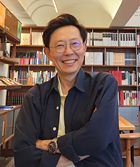 조윌렴 (이화여자대학교 물리학과) William Jo (Department of Physics, Ewha Womans University) 응용물리학으로의 여정 Journey of Applied Physics Together with fascinating and intriguing applied physics, and looking forward to a new era of science and technology advancement that we will embrace in the age of AI |
| 광물리 | 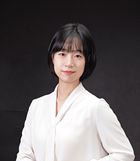 김소연 (DGIST 화학물리학과) Soyeun Kim (Department of Physics and Chemistry, DGIST) 광분광학으로 보는 전자와 격자구조 Electrons and Lattice structures Probed by Optical Spectroscopy 광학 전도도와 유전함수로 보는 물질의 전자/격자 구조 초고속 광분광을 통한 집단모드와 비평형 동역학 Electronic/lattice structure from optical conductivity and dielectric function Collective modes and nonequilibrium dynamics via ultrafast optical spectroscopy |
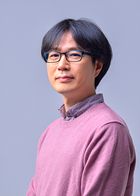 이종석 (카이스트) Jong Seok Lee (KAIST) 나노스케일 포논 수송과 열전달 Nanoscale Phonon Transport and Heat Transfer - 박막 및 계면에서의 포논 수송 메커니즘 - 열전도도와 계면 열전도도의 물리적 이해 및 측정: 열반사율 기법 위주 - Phonon transport mechanisms in thin films and across interface - Physical understanding and measurement of thermal conductivity and interfacial thermal conductance, with a focus on thermoreflectance techniques | |
| 나노/스핀 | 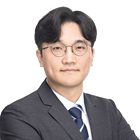 이길호 (포스텍) Gil-Ho Lee (POSTECH) 양자 나노전자소자의 응용 Applications of Quantum Nanoelectronic Devices 초전도 나노전자소자의 양자수송 현상, 조셉슨 접합 기반 양자상태 제어 및 초고감도 양자센서 응용 Quantum transport in superconducting nanoelectronic devices, Quantum-state engineering and ultrasensitive sensing applications using Josephson junctions |
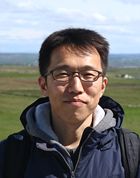 제숭근 (전남대학교 물리학과) Soong-Geun Je (Department of Physics, Chonnam National University) 스핀을 어떻게 써먹을 것인가? How Can We Put Spin to Work? 자성 없이도 중금속에서 쉽게 발현되는 스핀을 활용하는 방법에 대해 다룬다. 쟐로신스키-모리야 상호작용을 대충 이해한다. We explore how to exploit spins that can be readily generated in heavy metals without magnetism. We also aim to gain an intuitive understanding of the Dzyaloshinskii–Moriya interaction (DMI). | |
| 저차원 물리 |  류혜진 (한양대학교) Hyejin Ryu (Hanyang University) 차세대 반도체의 새로운 패러다임, 저차원 신소재 A New Paradigm for Next-Generation Semiconductors: Novel Low-Dimensional Materials - 저차원 소재의 전자적/물리적 특성과 차세대 반도체 응용 현황 및 전망 Electronic and Physical Properties of van der Waals Materials: Current Status and Future Prospects for Next-Generation Semiconductor Applications - 각분해광전자분광법 Angle-Resolved Photoemission Spectroscopy (ARPES) |
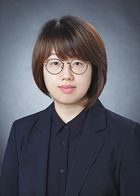 김지희 (부산대학교 물리학과) Ji-Hee Kim (Department of Physics, Pusan National University) 초고속 광전자 물리학 Ultrafast optoelectronic physics • 이차원 소재에서 광여기 캐리어의 이완·수송·확산 및 초고속 비평형 동역학 • 초고속 분광 및 광전류 측정을 통한 계면 전하 전달, 광전류 형성 원리와 소자 응용 • Ultrafast nonequilibrium carrier dynamics in two-dimensional materials: relaxation, transport, and diffusion • Interfacial charge transfer, photocurrent generation, and device applications investigated by ultrafast spectroscopy and photocurrent measurements | |
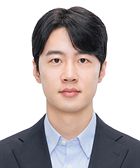 유효빈 (서울대학교 재료공학부) Hyobin Yoo (Department of Materials Science and Engineering) 전자현미경으로 탐구하는 모아레 계면의 새로운 물성 Revealing emergent functionalities at moiré interfaces with electron microscopy 전자 회절과 암시야 이미징의 원리 및 응용 Principles and applications of electron diffraction and dark-field imaging 모아레 계면의 원자 수준 설계와 새로운 물성 발현 Atomic-scale engineering of moiré interfaces and their emergent functionalities | |
| 계산물리 | 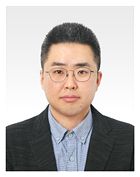 김정우 (인천대학교 물리학과) Jeongwoo Kim (Department of Physics, Incheon National University) 밀도범함수이론의 간단한 소개: 연구 활용을 중심으로 Brief introduction to density functional theory: Application in research DFT의 기본 개념, 실험 전공자를 위한 DFT 기초 ( Basic concepts of density functional theory, ABCs of density functional theory for experimentalists) |
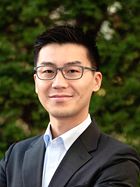 고동욱 (고려대학교 물리학과) Dongwook Go (Department of Physics, Korea University) 스핀트로닉스에서 오비트로닉스로: 그 다음은? From Spintronics to Orbitronics: What comes next? - 오비트로닉스 효과의 물리적 원리 Physical principles underlying orbitronic effects - 오비트로닉스의 타 분야로의 확장 가능성, 분야 간 시너지 및 향후 전망 Opportunities for extending orbitronics into other fields, interdisciplinary synergies, and future perspectives | |
| 실험기법 | 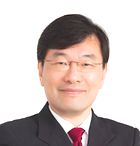 박용섭 (경희대학교 물리학과) Yongsup Park (Dept. of Physics, Kyung Hee University) X-ray 광전자분광기술(XPS)의 원리와 응용 Principles and Applications of X-ray Photoelectron Spectroscopy X-ray 광전자분광기술(XPS) 및 관련 물질 분석기술의 원리와 장비 구성을 살펴본 후 데이타 처리 기법 및 응용 예를 소개한다. The principles, data treatment methods and actual applications of X-ray Photoelectron Spectroscopy and related techniques are presented. |
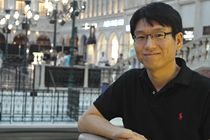 양상모 (서강대학교 물리학과) Sang Mo Yang (Department of Physics, Sogang University) 주사 탐침 현미경을 이용한 나노스케일 강유전성 연구 Nanoscale Investigation of ferroelectricity using scanning probe microscopy 강유전 도메인 동역학 및 강유전 소자 압전감응 힘 현미경을 비롯한 다양한 주사 탐침 현미경 기법 Ferroelectric domain dynamics and ferroelectric devices Various scanning probe microscopy, including piezoresponse force microscopy | |
| 에너지 | 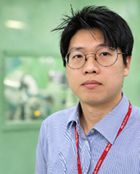 장서형 (중앙대학교 물리학과) Seo Hyoung Chang (Department of Physics, Chung-Ang University) 에너지 물질을 위한 오비탈 물리와 X-선 산란 분석 Orbital physics and X-ray scattering for energy materials - X-선 산란 측정법 - 에너지 변환 및 저장 시스템에서 보이는 오비탈 물리 - X-ray scattering and spectroscopy techniques - Orbital physics in energy conversion and storage systems |
| 박막성장 | 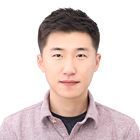 이승훈 (국립부경대학교 물리학과) Seunghun Lee (Department of Physics, Pukyong National University) 박막물리학 입문 Physics of Thin Films 101 - 진공의 기초 원리 및 장비, 진공 증착 기술 - 박막 성장 메커니즘, 첨단 박막 성장 기술 - Vacuum Fundamentals and Technology, Vacuum Deposition Techniques - Thin Film Growth Mechanisms, Advanced Thin Film Growth Techniques |
 장소연 (서울대학교 물리천문학부) Celesta Soyeon Chang (Department of Physics and Astronomy, Seoul National University) 원자에서 재료 특성까지: TEM으로 읽는 구조와 물성 From Atoms to Materials Properties: Probing Structure and Properties by TEM 원자 수준 구조 분석의 기초 다양한 전자현미경 기법 소개 Basics for atomic-scale structural analysis Introduction to various TEM techniques | |
| 양자 | 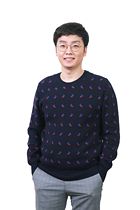 김도헌 (서울대학교 물리천문학부) Dohun Kim (Department of Physics and Astronomy, Seoul National University) 반도체 스핀기반 양자컴퓨팅 기술 Semiconductor spin qubit-based quantum computing technology 반도체 양자점 인공원자 (Semiconductor Gate-defined Quantum Dots), 양자논리게이트 (Quantum logic gates), 교환상호작용 (Exchange interactions) |
 채은미 (고려대학교 물리학과) Eunmi Chae (Department of Physics, Korea University) 양자컴퓨팅의 이해와 현황 Quantum Computing: Concepts and Current State 양자 중첩/얽힘 및 큐비트의 요건 (Superposition/entanglement and requirements for qubits) 양자 컴퓨팅 연구개발의 현황 (The current status of quantum computing research and development) | |
| 인공지능/AI | 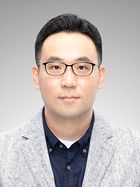 유선규 (서울대학교 전기정보공학부) Sunkyu Yu (Department of Electrical and Computer Engineering, Seoul National University) 고전 및 양자 광학에서의 복잡성 제어 Engineering Complexity in Classical and Quantum Optics - 무질서 매질 / - 양자 열린계 / - 네트워크 과학 - Disordered material / - Open quantum system / - Network science |
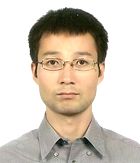 조정효 (서울대) Junghyo Jo (Seoul National University) 생성형 기계학습과 물리학: 에너지에서 스코어까지 Generative Machine Learning and Physics: From Energy to Score 에너지 기반 모형과 스코어 기반 확산 모형을 중심으로 생성형 기계학습의 원리를 소개하고, 통계역학 및 확률 동역학과의 연결을 살펴본다 This talk introduces the principles of generative machine learning, focusing on energy-based and score-based diffusion models, and explores their connections to statistical mechanics and stochastic dynamics. |
조직위원회
| 교장 | 성맹제 (중앙대) | |||
|---|---|---|---|---|
| 교감 | 이재광 (부산대) | |||
| 고문 | 장준익 (서강대) | |||
| 부서 | 교무부 | 학생부 | 총무부 | 미디어부 |
| 부장 | 류혜진 (한양대) | 이승훈 (부경대) | 김정우 (인천대) | 황진웅 (강원대) |
| 차장 | 이연의 (충북대) | 김지희 (부산대) | 김우진 (부산대) 김경환 (연세대) | 김소연 (DGIST) |
1/2 Page
| 번호 | 제목 | 등록일 | 첨부 | 조회수 |
|---|---|---|---|---|
 |
제 5회 응용물리 아카데미 (2027.02.16(화)~18(목) / 하이브리드 강의 (현장+온라인)) | 26.11.11 | - | 1 |
| 25 | 제4회 응용물리 아카데미 – 강의동영상 서비스 안내 | 25.02.25 |  |
122 |
| 24 | 제 4회 응용물리 아카데미 - 숙박예약 공지 | 24.12.11 | |
749 |
| 23 | 제 4회 응용물리 아카데미 (2025.2.10(월)~12 (수) / 하이브리드 강의 (현장+온라인)) | 24.10.24 | |
658 |
| 22 | [공지] 온라인 강의 안내 | 23.02.17 | - | 717 |
| 21 | [공지] 현장 강의 안내 | 23.02.17 | - | 500 |
| 20 | C11_한양대_정문석 교수님_페로브스카이트 | 23.02.17 | |
796 |
| 19 | Plenary_부산대_정세영 교수님_금속의 재발견 인생의 재발견 | 23.02.17 | |
724 |
| 18 | C10_울산대_김튼튼 교수님_THz 분광학 | 23.02.17 | |
785 |
| 17 | C9_아주대_서호성 교수님_양자정보소자 | 23.02.17 | |
748 |
| 16 | C8_군산대_김지완 교수님_펨토초 시분해 물리 | 23.02.17 | |
830 |
| 15 | C7_중앙대_전상준 교수님_위상물질 | 23.02.17 | |
806 |
| 14 | C6_경희대_김영덕 교수님_저차원 광원 | 23.02.17 | |
746 |
| 13 | C5_POSTECH_김준성 교수님_위상물질 합성 | 23.02.17 | |
676 |
| 12 | C4_고려대_공수현 교수님_나노포토닉스 | 23.02.17 | |
724 |